
- March 9, 2026
- Posted by: admin
- Category: Tax

Every year, many employees and business professionals in Lagos assume that their tax responsibilities end once their employer deducts Pay-As-You-Earn (PAYE) from their salary.
This assumption is understandable, but it is incorrect.
According to the Lagos State Internal Revenue Service (LIRS), every individual earning taxable income in Lagos State must file their Personal Income Tax (PIT) return annually, regardless of whether their employer has already deducted taxes through PAYE.
As the March 31 filing deadline approaches, the Lagos State Government has once again urged taxpayers to comply with this statutory obligation.
This requirement is not merely procedural. Filing your annual tax return is a legal obligation under Nigerian tax law, and failure to comply may attract penalties, interest, and enforcement actions.
In this article, we explain:
-
Why individuals must still file tax returns even when PAYE is deducted
-
Who exactly needs to file annual returns
-
The legal basis for filing Personal Income Tax returns
-
The benefits of filing your returns early
-
A step-by-step guide on how Lagos residents can file their tax returns through the LIRS eTax portal
If you live or work in Lagos, this guide will help you stay compliant and avoid unnecessary penalties.
Understanding Personal Income Tax Filing in Nigeria
Personal Income Tax (PIT) refers to the tax imposed on the income of individuals. In Nigeria, this tax is governed by the Personal Income Tax Act and administered at the state level.
This means that if you reside in Lagos, your tax matters are handled by the Lagos State Internal Revenue Service (LIRS).
Every year, individuals must declare their income from all sources and submit their tax returns to the relevant tax authority.
The filing deadline for individuals in Lagos State is March 31 of each year, covering income earned during the previous year.
For example:
-
Income earned between January 1 and December 31, 2025
-
Must be filed on or before March 31, 2026
This timeline aligns with provisions under the Nigeria Tax Administration Act 2025, which requires individuals to submit accurate returns within 90 days of the start of a new assessment year.
Why Filing Returns Is Still Required Even If PAYE Is Deducted
One of the most common misconceptions about tax compliance is the belief that PAYE deductions by employers eliminate the need for personal filing.
In reality, employers only report the income they pay to you.
Your employer cannot declare other income streams you may have.
For example, you may earn income from:
-
Side businesses or freelance work
-
Consulting engagements
-
Rental income
-
Dividends from investments
-
Interest income
-
Digital businesses
-
Capital gains
-
Royalties or intellectual property
Since employers have no visibility into these sources of income, they cannot include them in their PAYE filings.
This is why individual tax filing exists: to allow taxpayers to declare their total income from all sources.
By filing your personal tax return, you are confirming the full financial picture of your earnings for the year.
Who Must File Individual Tax Returns in Lagos?
The requirement to file annual tax returns applies broadly to individuals earning taxable income.
According to the Lagos State Internal Revenue Service, the following individuals are required to file:
Employees
Individuals earning salaries under the PAYE scheme must still file their own personal returns.
Self-Employed Individuals
Freelancers, consultants, and professionals operating independently must declare their annual income.
Business Owners
Entrepreneurs and sole proprietors must disclose profits earned during the tax year.
Individuals in the Informal Sector
Artisans, traders, and independent service providers are also expected to comply.
Professionals
Lawyers, accountants, engineers, doctors, and consultants earning professional fees must file returns.
Essentially, anyone earning taxable income while residing in Lagos State should file annual tax returns.
Benefits of Filing Your Personal Income Tax Returns
Beyond legal compliance, filing your PIT returns provides several important benefits.
1. Obtain Your Tax Clearance Certificate (TCC)
A Tax Clearance Certificate is an official document confirming that you have paid your taxes.
It is required for many important transactions, including:
-
Applying for government contracts
-
Processing visas
-
Property transactions
-
Business registrations
-
Loan applications
-
Immigration documentation
Without filing your returns, you cannot obtain a valid TCC.
2. Demonstrate Financial Credibility
Proper tax compliance strengthens your financial profile.
Banks, government institutions, and investors often require proof of tax compliance before approving applications.
Regular filing shows financial transparency and credibility.
3. Avoid Penalties and Enforcement Actions
Failure to file your returns by the statutory deadline can result in:
-
Administrative penalties
-
Interest on unpaid taxes
-
Tax audits
-
Enforcement actions by tax authorities
Early filing helps you avoid these risks entirely.
4. Maintain Accurate Financial Records
Filing tax returns annually helps individuals keep track of their:
-
Total earnings
-
Allowable deductions
-
Pension contributions
-
Financial growth
This financial visibility can be useful for personal planning and business decisions.
SEE ALSO: Who Should Charge VAT in Nigeria?
The March 31 Filing Deadline
The Lagos State Government has reiterated that individual tax returns must be filed on or before March 31.
This deadline applies to:
-
Employees
-
Business owners
-
Professionals
-
Self-employed individuals
Failure to comply may result in statutory penalties and interest.
The government encourages taxpayers to file early, file accurately, and remain compliant.
How to File Your Personal Income Tax Returns in Lagos
Fortunately, filing tax returns in Lagos has become easier due to digital tax administration.
Individuals can now submit their returns online through the LIRS eTax portal.
Below is a simplified step-by-step guide.
Step-by-Step Guide to Filing PIT Returns via the LIRS eTax Portal
Step 1: Visit the eTax Portal
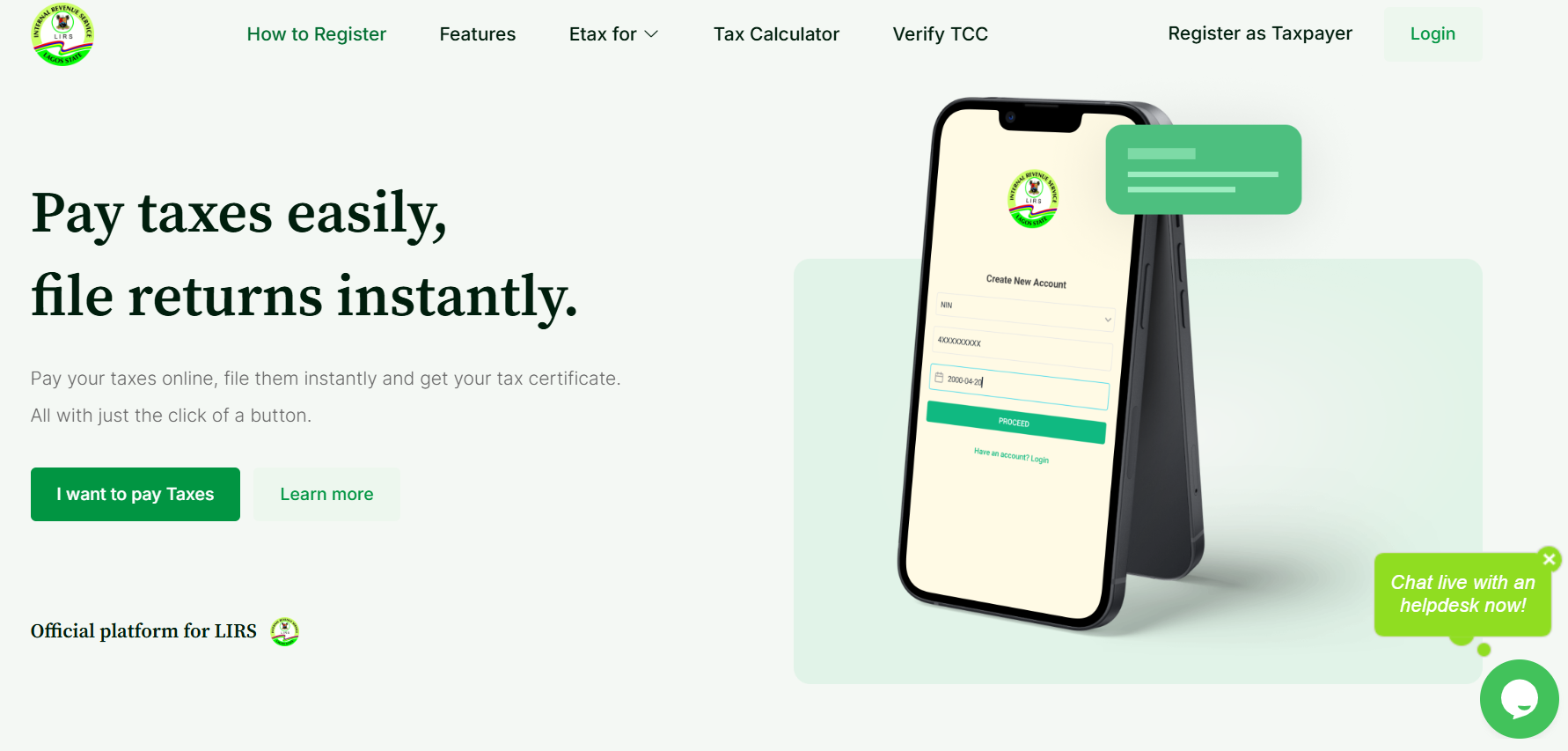 Open your web browser and visit:
This is the official platform provided by the Lagos State Internal Revenue Service for electronic tax filing.
Step 2: Log in to Your Taxpayer Account
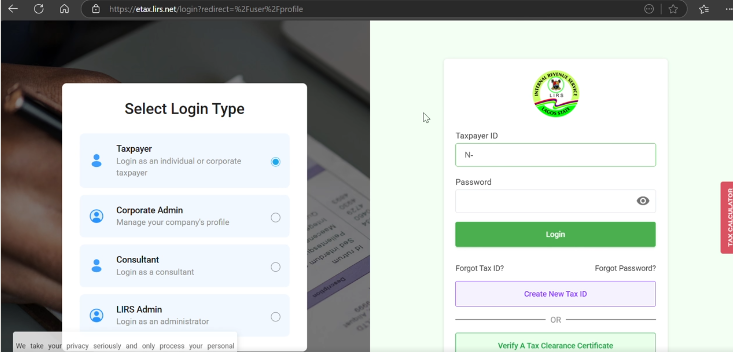 Click Login and enter the following details:
-
Your Taxpayer Identification Number (TIN)
-
Your password
Your taxpayer ID typically starts with the prefix NIFIN, followed by a series of digits.
Ensure you select “Taxpayer” when logging in.
Step 3: Access Employer Filed Returns
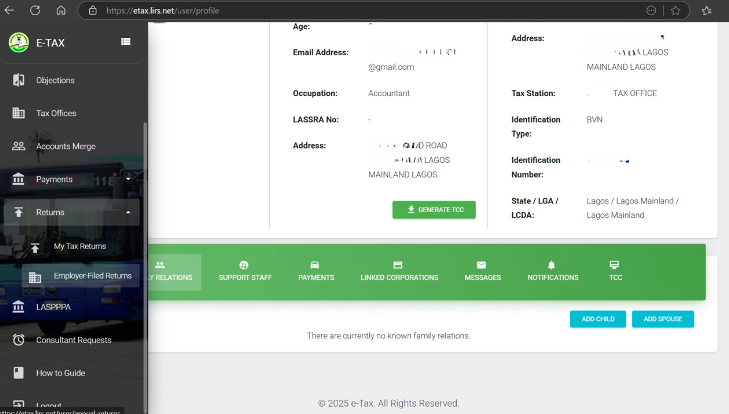
Once logged in, navigate to the Returns section on the left side of the dashboard.
Click Employer Filed Returns.
Here you can view the income your employer declared for you through the PAYE system.
If you worked with multiple employers during the year, their entries will appear here.
You must sum up the gross income from all employers.
Step 4: Start Filing Your Personal Return
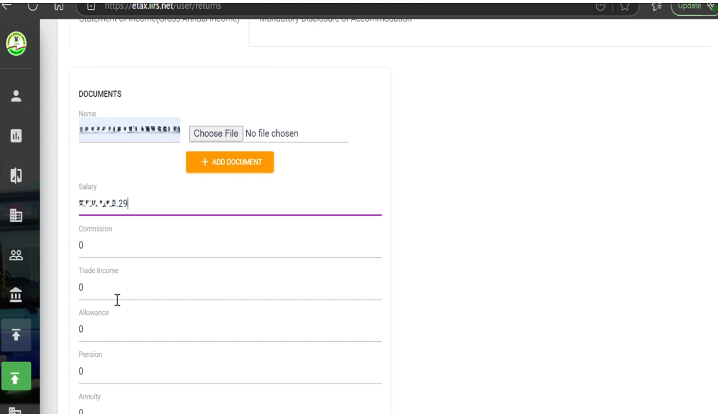 Next, navigate to the Tax Returns section.
Click File Returns to begin the filing process.
You will be asked to enter:
-
Your name
-
Your total gross income for the year
If you have additional income beyond your salary, this is where you should declare it.
Step 5: Upload Supporting Documents (Optional)
 The platform may allow you to upload supporting documents such as:
-
Bank statements
-
Income records
-
Supporting financial documentation
While optional, uploading relevant documents can strengthen the accuracy of your filing.
Step 6: Provide Accommodation Details
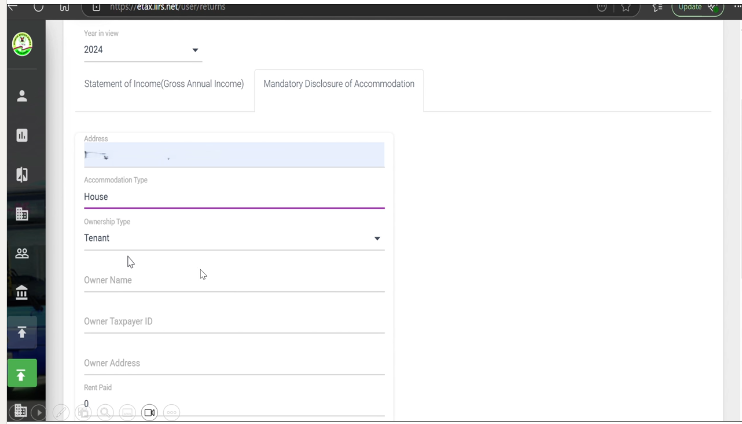 You will also need to disclose your residential information, including:
-
Your address
-
Type of accommodation
-
Landlord details (if available)
-
Rent paid
This information helps tax authorities track withholding tax obligations on rental income.
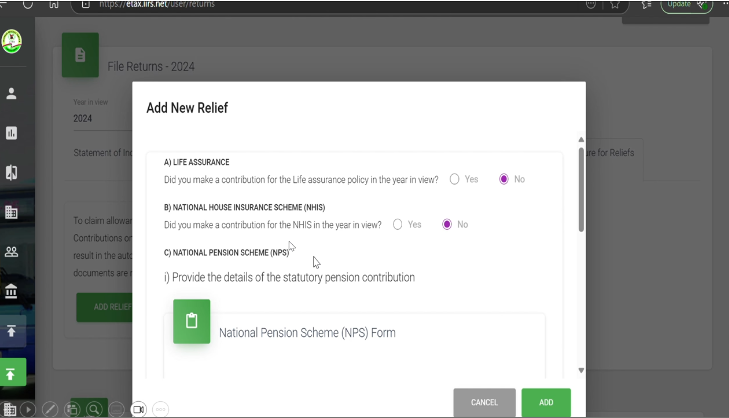
Step 7: Declare Reliefs and Allowances
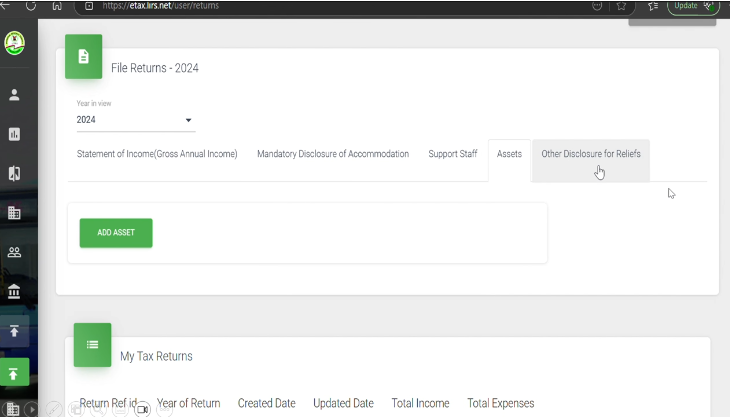 You may also include tax reliefs such as:
Pension Contributions
Input your Pension Account Number (PIN) and the total employee contribution for the year.
You can retrieve this information from your pension statement.
Life Assurance Policies
If you pay premiums for life insurance, you may claim deductions.
National Health Insurance Contributions
NHIS contributions may also be declared where applicable.
These deductions help ensure your tax assessment is accurate.
Step 8: Review Your Filing
After entering all required details, the portal will display a summary including:
-
Salary
-
Assets
-
Tax reliefs
-
Disclosures
Carefully review this information before submission.
Step 9: Submit Your Returns
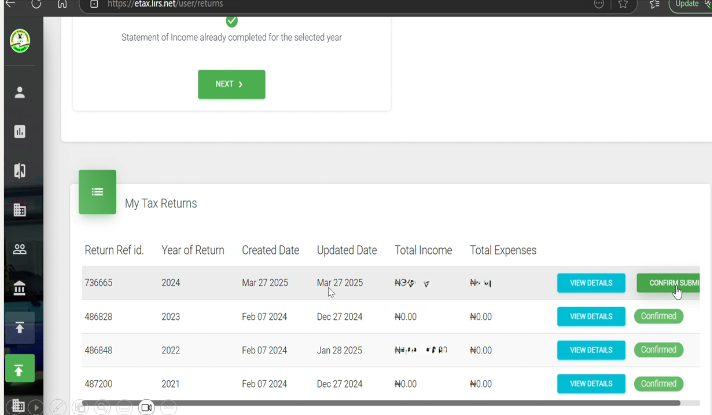 Once you confirm the information is correct, click Confirm Submission.
You will receive a confirmation message indicating that your returns have been successfully filed.
The system may also send a confirmation email.
Common Challenges Taxpayers Face When Filing Returns
Many individuals delay filing their returns due to common challenges such as:
-
Not knowing their Taxpayer ID
-
Difficulty retrieving income records
-
Uncertainty about declaring additional income
-
Confusion about reliefs and deductions
Professional tax advisors can help resolve these issues and ensure your filing is accurate.
Why You Should File Your Returns Early
Waiting until the last minute to file tax returns can create unnecessary pressure.
Early filing provides several advantages:
-
Time to correct errors
-
Avoidance of system congestion
-
Faster processing of Tax Clearance Certificates
-
Reduced risk of penalties
Tax compliance becomes significantly easier when approached proactively rather than reactively.
How FSC Professionals Can Help
Navigating tax compliance can sometimes be complex, especially when dealing with multiple income streams or tax relief claims.
At FSC Professionals, we support individuals and businesses with:
-
Personal Income Tax filing
-
Tax compliance advisory
-
Tax planning and optimisation
-
Tax Clearance Certificate processing
-
Digital tax filing support
Our team ensures that your tax obligations are handled accurately, efficiently, and in full compliance with regulatory requirements.
Final Thoughts
Tax compliance is not just the responsibility of employers; it is a personal obligation for every income-earning individual.
Even if your employer deducts PAYE from your salary, you are still required to file your Personal Income Tax returns annually.
This process allows tax authorities to assess your total income from all sources and ensures you remain compliant with Nigerian tax laws.
As the March 31 deadline approaches, now is the best time to file your returns and avoid unnecessary penalties.
Taking action early helps you stay compliant, maintain financial credibility, and secure important documents such as your Tax Clearance Certificate.
If you need assistance filing your returns or navigating the eTax portal, FSC Professionals is here to help.